Monday, May 28, 2012

To the Bastille! Election Day A La France


It's a big one.  It seems to on everyone's mind, and everyone's go to conversation topic, kicking the weather to the side (poor weather).  Yes, it is the French presidential election.  It occurs every five years, and this year's may be more monumental then others.  Why?  The candidates.  And of course, the French people: Francaise e Francais.  It is they who really choose the candidates.  And it is they who have made this a more monumental year.  In the primaries, they voted the far right, the middle right, and the far left in almost equal measure. Marine La Pen,  of the far right Front National Party, daughter of the famous (and racist) politician Jean-Marie Le Pen received 17.9%.  Sarkozy, the current president and leader of the middle right party "Union for a Popular Movement" (UMP), received 2nd most French votes.  Hollande, the up and coming from the far left, surprisingly received the most French votes, putting him in the lead.  The two candidates with the highest votes move on to the final election, only two weeks following.

So far, fairly similar to the American election system, right?  Well yes and no.  Yes, there is voting, done by the people, for the people, in choosing the most correct candidate.  But aside from that, much is different.  For one, each candidate is given an equal amount of advertising time on the radio and on television.  It is the law.  Secondly, there are not two parties running the show.  There are several, perhaps dozens of parties running.  It is not a matter of financial backing, it is a matter of popularity.  Third, the right is far from right when compared to the states.  The right of France is left of the left of America.  And the left of France? Well off of American charts.  In the socialized healthcare and sturdy safety net of France, French politics commences on a separate playing field.

Fourth, and a slightly separate topic: voting day.  It has come!  In France, voting day is always held on a Sunday, and the polls are open almost all day, until around eight in the evening.  As such, last Sunday brought me to Luzarches, a tiny town just north of central Paris, and home to my boyfriend.  The voting cites are also always located in schools or community centers.  When we arrived, we simply walked down the street five minutes to John's old grad school.  Of course, not forgetting voter registration cards.  Unlike the states, where one just needs an ID, France provides each citizen with a voting card, which they must bring with them every time they vote.  It states the the area with which they are registered to vote, and is stamped every time one votes.

The voting system, as you can see from the pictures below, is much more complicated.  Okay maybe that is an overstatement.  Okay maybe that is a lie.

Actually, it is quite simple.  One takes a card of each candidate's name, steps into the curtained booth, places the card of their preferred candidate into the provided envelope, and slips the envelope into the big locked box at the front of the room.  It is that easy.  Before slipping in your candidate of choice, one must show their voter registration card, and have their name crossed off.

So what now? Now you wait.  All day, like in the states, numbers are called in on the radio and on the news.  Everyone knew this was going to be a close election.  With Hollande's surprising win in the first election, everyone was nervous as to which side would take the lead.  Wait, go back for a second, why is Hollande's win surprising? Hollande represents the left slant of French politics, the French Socialist Party.  The left hasn't held the presidential seat since 1995 under Francois Mitterand (1981-1995); that is 17 years of right Presidents.  Additionally, Sarkozy's extensive political career initially constructed him as a shoe-in for this presidential term.

By eight o clock, it is over.  Well not officially, like in the states, but really, it is over.  The outcome? It was close, and once again, surprising.  Hollande wins with 51.6 percent of the vote, with Sarkozy trailing at 48.7 percent.  Pretty close.  Over seventy percent of French citizens vote for their president.  Can the states boast the same numbers?  A couple other points of interest.  The votes are counted, and are then checked by four private companies.  The votes are checked.  Four times.  Pretty good.  Also, there is no electoral system.  A person's vote counts towards the entirety of the votes, rather than a person's vote persuading the interest of a handful of individuals within your region to make the best choice.  Which is more democratic? You decide.

Party over.  At least for Sarkozy fans and the stage set up at Place de la Concorde.  We arrived back in Paris in the early evening, took a nap, and saw the results: astonished.  Disappointed, we each went to our own work; I studied and John worked on the computer.  However, the incessant honking and yelling from the street below finally got to me.  "Want to go for a walk and check it out, just for five minutes?"  "Yeah sure why not".

"Maybe there is something happening at the Bastille" John remarks.  We leisurely head in the that direction, being just 10 minutes walking distance from the Bastille.

We couldn't have been more right.


Of course, could we have been more stupid? The Bastille, the taking of the Bastille, the freeing of the prisoners during the French Revolution, the symbol of French liberte, egalite, fraternite, of course this would be where Hollande fans would reunite.  But it wasn't just reuniting.  As we got closer to the center, (and closer to realizing sandals were not such a good idea), the feeling of being a sardine in a tin, like on the metro, became ever more of a reality.  We could not even reach the Bastille.  The large car run roundabout had transformed into a round tin of French sardines.  The people were infinite.  The entire roundabout was packed; men and women were on top of light poles and on top of the monument itself, waving flags and lighting fireworks.   Oh yeah, a leisurely stroll to the Bastille.  Wrong.  We found ourselves in the middle of a frenzied after party, a mix of those politically charged for the future, and those finding an excuse to drink and smoke excessively in public.

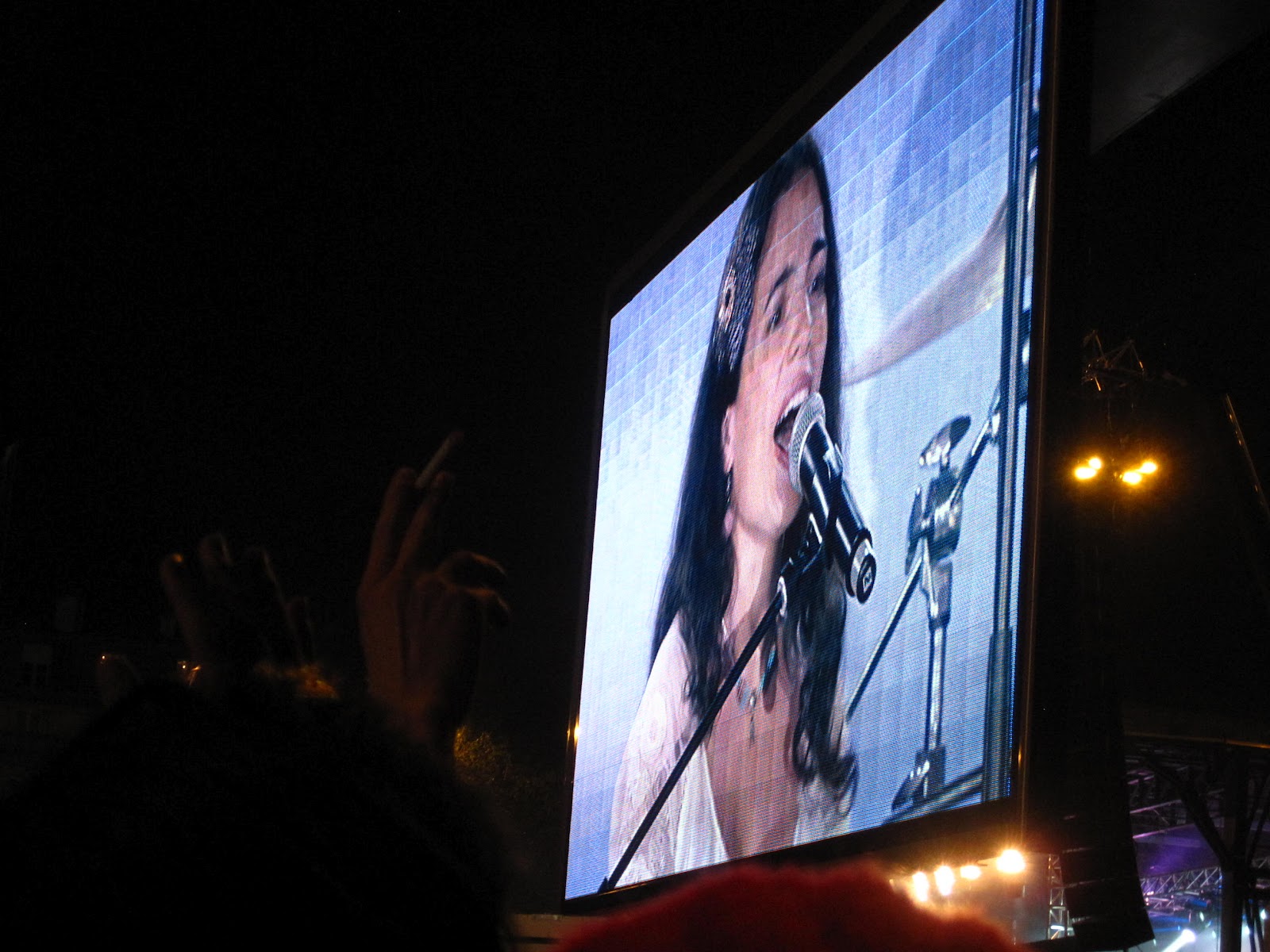


We continued moving inward, wondering why the packed circle kept enlarging at 11:30 in the evening.  Finally, after asking a fellow sardine, we were told that Hollande was coming to the Bastille, to give a speech, at midnight.  The man was coming! And we could see it! We decided to wait.  We waited, and waited, and waited.  After an hour of being pushed around and inhaling a couple of cigarette packs from our smoking neighbors, we decided to leave, not knowing when he would arrive.


Of course, as newspapers indicated the following morning, Hollande arrived an hour later than due, at 12:45am, twenty minutes after we had parted ways with the Bastille's Hollandites.  Bummer.  On the bright side, or toes remained intact that following morning.


As I am writing this, it is now the end of May, with assembly elections around the corner.  Unlike the states, assembly elections follow the same drum as the presidential election, occurring every five years, a couple weeks following the presidential election.  

Already, Hollande's actions have landed mixed criticism in the eyes of the French.  Whether a Hollande supporter or critic, his actions are intriguing in an entertaining sort of way.  Of course, I am American.  I am sure the French, on both sides, do not see him as entertaining, but rather as a beacon of light, leading France into a more egalitarian future, or as a Cassandra catapulting into a system on the verge of collapsing.


Time will tell.  


Wednesday, May 9, 2012

Day 2: Sirmione, Italie


Where? What? Who?  Haven't heard of Sirmione? I hadn't either.  

Here she is! 

The perks of living in another country is finding the the places that country considers gem travelling destinations. For France, Sirmione is one of them.  Thank you France.  France one, Lonely Planet Guide zero.

Merci

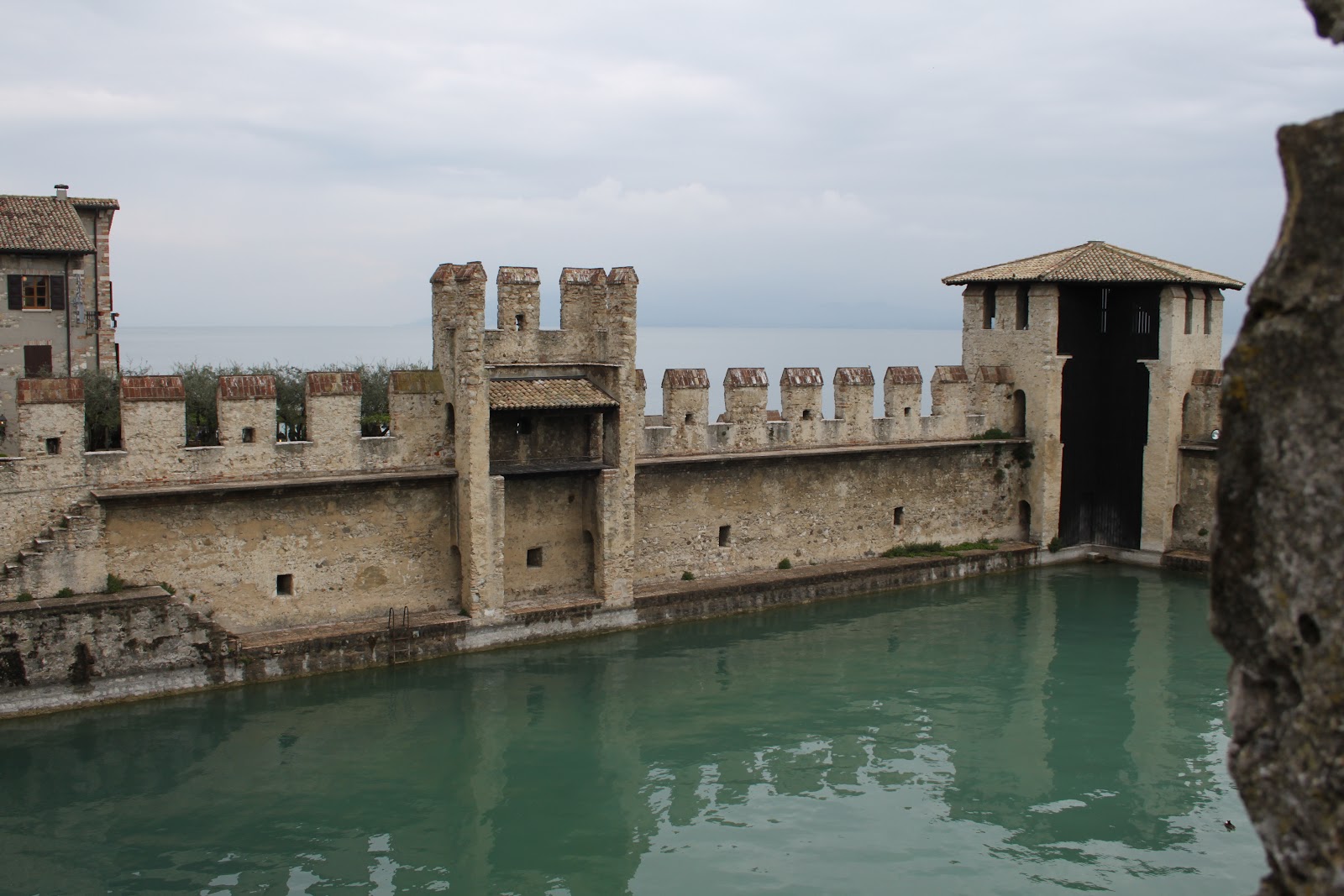
Sirmione is a tiny town situated at the end of a peninsula jutting off of the southern end of Lake Garda.  Possessing the ruins of an ancient Roman Villa, as well as a medieval water fortress, Sirmione is a town worth visiting, even if a bit touristy.


View from the top of the fortress looking south, mainland.  Even at the tip, the peninsula stretches out pretty thin over Lake Garda.

View from the opposite side of the fortress, facing north. Nothing but Lake Garda, oh and some pretty buidlings.  Gotta love the color in Italy.

Why thank you, I did take this picture of a picture.  Mighty creative.  The water fortress side of the castle. Pretty cool.  The uncool part: not being able to walk on it.


The pictures directly above give you a glimpse of the truly peninsual feel of the city, and the medieval fortress.  The pictures below show all that remains of the Roman Villa.  While guide books and travel plans hailed the site as a the most well preserved Roman villa in Italy, I have my doubts.  Even if it is, I am not sure it is worth the ticket in getting in.  Luckily for us, it was culture week, so everything, including the fortress, was free.

The beauty of the place lies in the silence and absence of people.


Wall remaining from second floor of villa.


Old olive trees inhabiting the villa garden...notice the tree trunks...strong creatures.


I can also say that I had the best fior di latte gelato of the trip in San Sirmione, at the organic gelateria.  I do not remember the name of the place, but walk past all the other gelaterias handing you large samples, take the samples of course, and continue to the upscale organic gelateria that doesn't seem to want to help you.  Yes that is what one you want.


Keep going.


Take a sample, and pass go.


And stop.  Well not really here, but with that gelato.  Don't let the face deceive you!


 And what is fior di latte?  It is not vaniglia, as it looks, so do not be fooled.  Literally meaning "milk flower" fior di latte is simply your most simple gelato.  But that may be what makes it so good, and sometimes so bad.  The ingredients are basic: milk, sugar, and cream.  Therefore, the quality of the ingredients truly impacts the quality in taste for such a simple flavor.  People have different ways of judging the quality of gelato at a gelateria.  Some have said to look at the pistachio, others have said to look at what the gelato is stored in.  To me, it is in the fior di latte.  If the firo di latte is not spectacular, you know the others will not be spectular, since milk forms the basis of all gelato.  Okay I digress, back to Sirmione.


Okay enough talk.  To really enjoy Sirmione, it must be seen.  


Castle...

Castle...


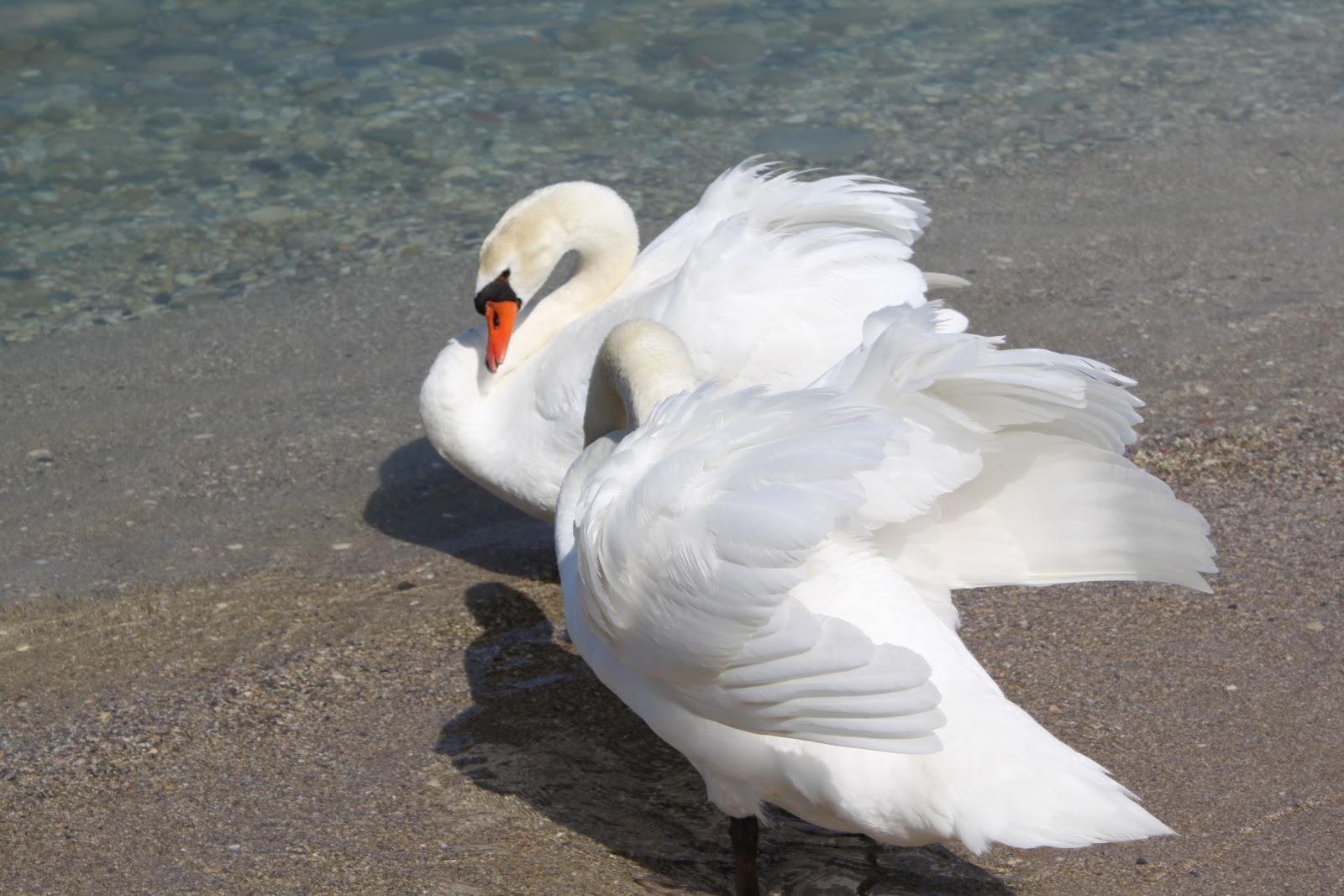
Ooh look! Birdies!


Okay, castle

Caslte...


Drawbridge!

Don't try to roll the stone...

Lest you want to go from this....

To this

And cause this

But I sued, so they gave me this.

And he seems to be okay with it.


Sure!

No Italian post is complete without outrageous accessories and trashbag jackets, thank you Italy.

Friday, May 4, 2012

Today, I took a shit. In Italy


There got your attention.  If I did not get your attention, it is because you have been spending every sidetracked moment on Facebook, and your jaded interest in people's mundane updates on life has shown through.


No, this is not about my shits in Italy, hate to disappoint some of you.  But this is the first of many posts on the nine day Northern Italy skirmish my boyfriend and I just returned from.  I do not want these postings to be a humdrum account of every hour and every skirmish on the trip, much like Facebook has become.  I agree, shitting can be pretty interesting at times, especially when travelling, but this event is a daily part of life.  I want to show you the ordinary in Italy, which becomes un-ordinary through foreign eyes.

My hope is they will not bore you.  But I confess, as a traveller always reading others' blogs on places to visit and hole in the wall reccomendations, some of these blog posts may take on a Rick Steeve's personality, so I apologize.  However, if you are planning to visit any of the places, milk it.

And here is another teaser to get you salivating...enjoy!


Monday, April 16, 2012

My Easter in Pictures

    If you really want the dirt on Easter traditions in France, check out the previous post.  But for some French countryside eye candy, check out this one.  John and I spent the Easter weekend at his family's house, in a small town just north of Paris.  We hunted for Easter eggs, ate gigot d'eagneau (traditional Easter food: baby lamb) and enjoyed the the blossoming of springtime, despite the rain and overcast conditions of the weekend.

The hunt begins...

To find 48 of these little guys


Our excuse: it's a big yard! (ie last picture)

Spring in France: all abloom

In a yard this expansive...

Saturday, April 14, 2012

Easter in France: Fish and Flying Bells Galore


Yes, it is coming.  Yes, everyone knows it is coming.  Even for the person who has never heard of Jesus, or no conception Easter, they know Easter is around the corner.  One needs only to walk into a grocery store; the displays of chocolates, baskets, and bunnies are hard to miss.  In Paris one can be even more obtuse.  Simply walking down any street will inevitably lead one to a patisserie or chocolatier displaying hand-crafted chocolate eggs three feet tall, mounted next to chocolate baskets holding chocolate chicks or rabbits.  The detail involved is impressive, with price tags to match.

   
While one can find the usual suspects identifiable to the American eye, such as the bunny rabbit, the chicks, the eggs, the baskets, there are also a handful of seemingly not traditional Easter figures.  A fish? A bell? Confused, I thought nothing of it.  Wrong. As with most things in Europe, every item has a story and a tradition attached to it.  As an American, it is a lesson I am refreshed on every day, living in a city and nation steeped in tradition and culture.
 

   So the fish, why a chocolate fish?  Rather than marking the entrance of Easter, the fish marks the first day in April, known in both the states and in France as April Fools Day.  Like in Italy and other European countries, the day of pranking entails children sticking paper fish to the backs of school teachers and adults and yelling "Poisson d'Avril!" (April Fish!).  If the teacher hasn't noticed a paper fish on their back, then they have truly been fooled by a person much younger than them.  But it is all in fun; at the end of the day, children receive chocolate fish by their school teachers or parents.  So when you see chocolate fish in the windows of chocolate shops in France, fear not!  Spring has approached, and watch your back.


The bells?  I had no idea, until a cultural class I am taking at the Sorbonne filled me in.  If you are in France around Easter time, and especially if you are residing close to a church, listen closely.  Hear anything? That's right, you don't.  Legend has it that, hundred of years ago, on the day of Jesus' crucifixion, all the church bells flew from their steeples in Paris and headed to Rome (the Vatican) to mourn the death of Jesus, and there they stayed.  On Sunday morning, the day of Jesus resurrection, the bells rejoice in the good news and fly back homes, ringing in the good news of Jesus' rebirth.  In the midst of this joyous ringing, the chocolate eggs the bells hold in the depths of their bellies become jostled and loosened.  As such, these eggs fall from the sky, landing in yards and gardens across Europe.  Children collect the chocolate eggs from the yards, a reminder of the bells' return and Christ's resurrection.  This also explains the absence of ringing from Thursday until  Easter Sunday.  Of course, on Sunday, the bells go off pretty much non stop.


When I explained the history of Easter Eggs to my French boyfriend one night over dinner, the reaction was, "what a cracked out story to tell kids".   Yes, it is pretty crazy, who would believe that church bells are the keepers of chocolate eggs?  If you come across pictures recounting the story, you will notice wings attached to the bells as well, as if they are birds and  thus capable of producing eggs.  It is rather funky, but quirky traditions and customs are the core of a culture, and they bring life and togetherness to the communities and families sharing those cultural beliefs and customs. In a country and culture where I at times still feel like an outsider, it is these traditions that bring me closer and make me feel more incorporated into a culture I am learning to call home.